Friday, February 20, 2015

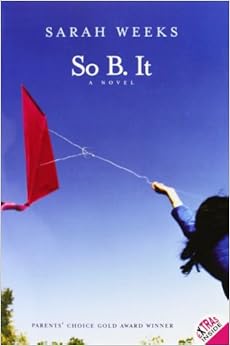
Weeks, Sarah. (2005). So B. It. New York: HarperCollins.

This books won the Rebecca Caudill Young Readers Book Award in 2007 and the Parents Choice Award. This story is about a young, thirteen-year-old girl named Heidi who lives with her mother that is mentally-disabled and her neighbor, Bernadette. Because of her mother's disability and her neighbor's fear of going outside, Heidi has to do many duties beyond her age. One day, Heidi finds a camera hidden in a drawer that contains clues to her family's history. She goes on an adventure to New York to uncover more about her family's unknown history and to discover the meaning of the word her mother repeats, "soof." Throughout her journey to New York she meets kind and helpful characters as her "lucky streak" seems to continue. Once in New York she meets a man who also has a mental-disability, and he says her mother's word, "soof," to her also. While the man's caretaker is not helpful to Heidi, a friendly woman, Ruby, and her husband help Heidi investigate further. In the end, Heidi finds out that the man who repeated the word "soof" to her is actually her father! The story ends bitter sweet because her mother dies, but Heidi gains a father, grandfather, and many friends. In addition she learns the meaning of her mother's word, love.
This heart-warming story would be a great book to use for a literature focus unit. It has rich vocabulary, deep themes of friendship, family, love, and disability acceptance, and is a suspenseful page-turner for young readers. I think this book would be perfect for a literature focus unit.
Falconer, Ian. (2012). Olivia and the Fairy Princesses. New York: Atheneum Books for Young Readers.

This Goodreads Choice Award-Winning book is another story about the fun-loving and familiar pig, Olivia. Students will love this book if they have already previously read Olivia books and fallen in love with her. It is the 7th Olivia book in which the independent and high-spirited pig questions her identity especially when her father calls her "his little princess." Olivia questions why the princesses that girls often envision are pink; she challenges this idea with thinking about Indian princesses or African princesses.
While this book may seem to be a typical girly book like the familiar Fancy Nancy books, it, in fact, challenges such girly stereotypical notions of princesses. I think this book could be used for both boys and girls in a lesson. One idea I thought of would be to read this book, discuss alternative types of princesses and princes, and then research or study different types. This could be used as a Social Studies lesson for even the upper elementary grades to learn about other cultures and their royalty.
The following is a picture of another activity in which students would compare and contrast two princess books and how the princesses are portrayed:


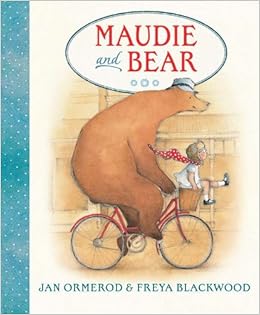
Ormerod, Jan. (2010). Maudie and Bear. New York: G.P. Putnam's Sons Books for Young Readers.

This book won the Children's Book Council of Australia's Early Childhood Book of the Year in 2011. This lovable story is about a young girl and her beloved friend, Bear. The story goes through their typical daily life together. An interesting aspect to this picture book is its use of chapters within a short picture book. The illustrations throughout this book depict Maudie and Bear's fun, daily activities through cartoon illustrations. The book simply goes through daily routines and actions that Maudie and Bear encounter, but it also has important themes of friendship and love.
The following is a link with teacher resources to go along with this book, in which contains author information, comprehension questions, and activities related to the book for young students: http://www.earlywords.info/maudie_and_bear.%20teacher%20notes.pdf

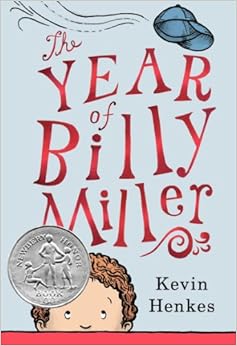
Henkes, Kevin. (2013). The Year of Billy Miller. New York: HarperCollins Publisher.

This John Newbery Medal winning book is about a second-grade boy, Billy Miller. The story begins at the end of his summer vacation when he falls and bumps his head while visiting the Jolly Green Giant Statue. While Billy's mom is worried that the new bump on his head will affect his upcoming school year, Billy overhears his father thinking that this year will be "the year of Billy Miller." From then on the story portrays Billy's twist and turns throughout his second-grade school year. He battles with a girl, Emma, and tries to prove himself to be a good, smart second-grader. Through his big art project and babysitting, Billy learns how to solve problems as well as loving his sister. The story ends with Billy having to memorize a poem about a person of his choice, and it truly ends up to be the year of Billy Miller because he proves to be a smart, kind boy. I thought students in second-grade would love this book because it is about a second-grader, and it is silly while at the same time teaches lessons.
The following is a link to other books by Kevin Henkes, information about the author, discussion questions for The Year of Billy Miller, and activity ideas for The Year of Billy Miller: http://www.kevinhenkes.com/wp-content/uploads/2014/06/Year%20of%20Billy%20Miller%20TG%20FINAL.pdf

Wiesner, David. (1991). Tuesday. New York: Clarion Books.

This Caldecott award-winning book is a twist compared to other popular children's picture books. This is a story with little text. There are a total of only 6 words in the entire story starting on the first page, "Tuesday evening, around eight," later in the story, "at 4:38a.m," and on the last page, "next Tuesday." The uniqueness of this book intrigued me. As I went through the story, even without text, I felt more involved in the story than I typically would for a picture book. From the beginning, the frogs in the story go on a journey from their pond homeland to the city and neighborhoods, in which they observe new scenes. At one point they almost get caught by a dog, but the dogs ends up joining them on their journey. The frogs go back home, but they left traces of themselves throughout the town. At the end of the story, it seems to be suggesting that the next adventure will belong to the pigs.
I thought this book would be great to use for young, emergent readers because invented storytelling could take place. Imaginations could run wild while reading this book because of the freedom of no text. Young students could perform a read aloud in which they read the story using their own words based off of the pictures.
I thought a good activity for older students would be to write text for the illustrations of the story.
Another option would be to have students writ a continuation of the story using their predictions of what they think the pigs' journey would be.

Thursday, February 19, 2015

Zemach, Harve and Margot. (1986). "Duffy and the Devil" New York: Square Fish.

This multicultural fairytale is a Celtic version of "Rumpelstiltskin."   This tale starts with a squire hearing a woman beating her stepdaughter, Duffy, for “romping with the boys instead of knitting stockings or spinning yarn.” The squire takes Duffy to his home in which she is instructed to spin wool, which she hates. One night, a “manikin” comes to her offering her a deal, and in the end, Duffy guesses the manikin’s name correctly, Tom Tit Tot (A.W.T. and Clodd 1889). 
This could be used in the classroom when talking about a different culture's history, such as Irish (it may be good to do this around St. Patrick's Day). Students could learn about Celtic history before reading this.
 

Wednesday, February 18, 2015

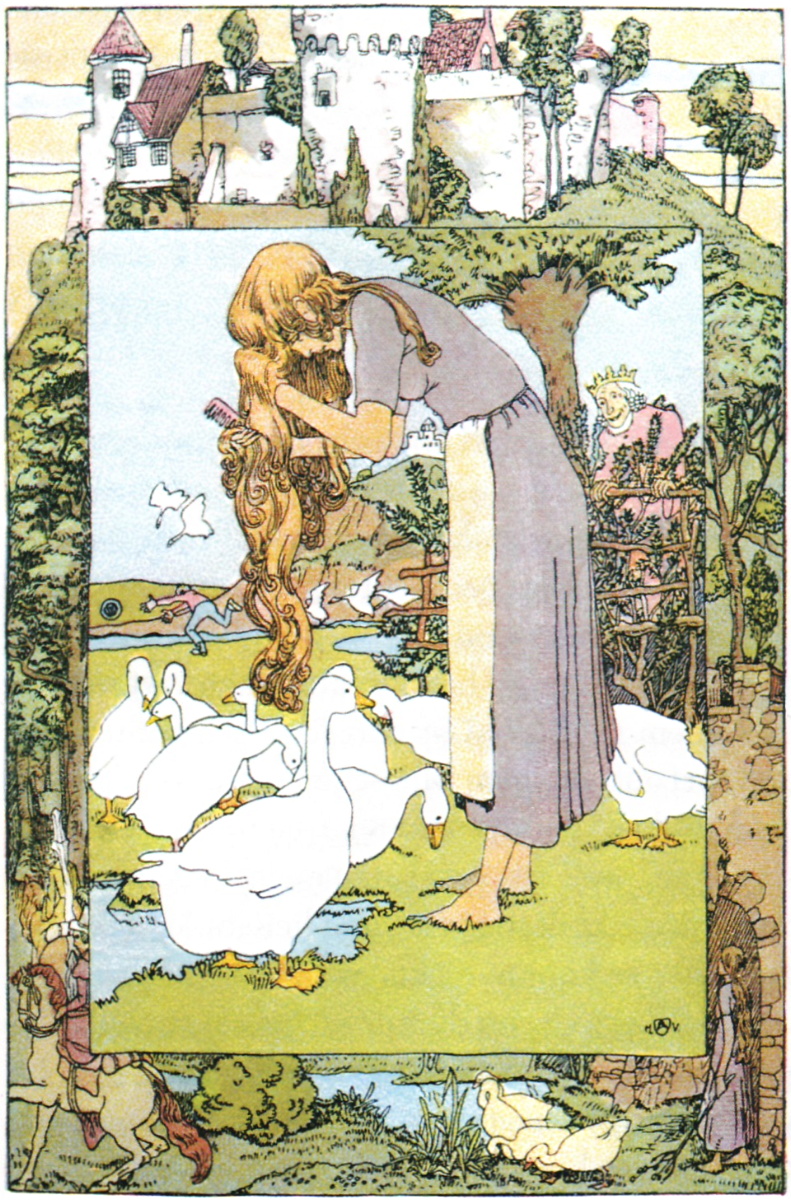
Grimm. (2012). "Goose-Girl." Grimm's Complete Fairy Tales. New York: Fall River Press.

This fairytale is about a bride who is set off with the blood of her mom. The maid played the princess and did not get her drink when the princess requested. The princess calmly accepted that, but the maid continued to defy the princess by riding Falada (the princess's horse) and trading clothes with the princess. The maid tricked the man into thinking that she was the princess and marrying her. Meanwhile, the real princess tended to the geese with Conrad and spoke to the dead horse's beloved head. Eventually the king found out that he was tricked and that the goose girl was in fact the real princess, so he married her.
This fairytale could be used to talk about lying.
This fairytale could also be used to compare to the other deceitful fairy tales, and students could discuss more moral ways the characters could have solved their problems.